El Niño Is Here — What Northern Michigan Homeowners Should Know About Their Heating and Cooling
If you've been paying attention to weather news lately, you've probably seen mentions of El Niño. It's not just a buzzword — NOAA officially announced that El Niño has developed in the tropical Pacific and issued an El Niño Advisory. And conditions are expected to strengthen into the Northern Hemisphere winter of 2026–27.
For homeowners in Oscoda, Crawford, Ogemaw, Montmorency, Alcona, and Alpena counties, this is worth paying attention to — not because it guarantees any specific weather outcome, but because the pattern shifts the odds in ways that put real pressure on heating and cooling equipment.
Here's what the science actually says, and what it means for your home.
What El Niño Is — and What It Isn't
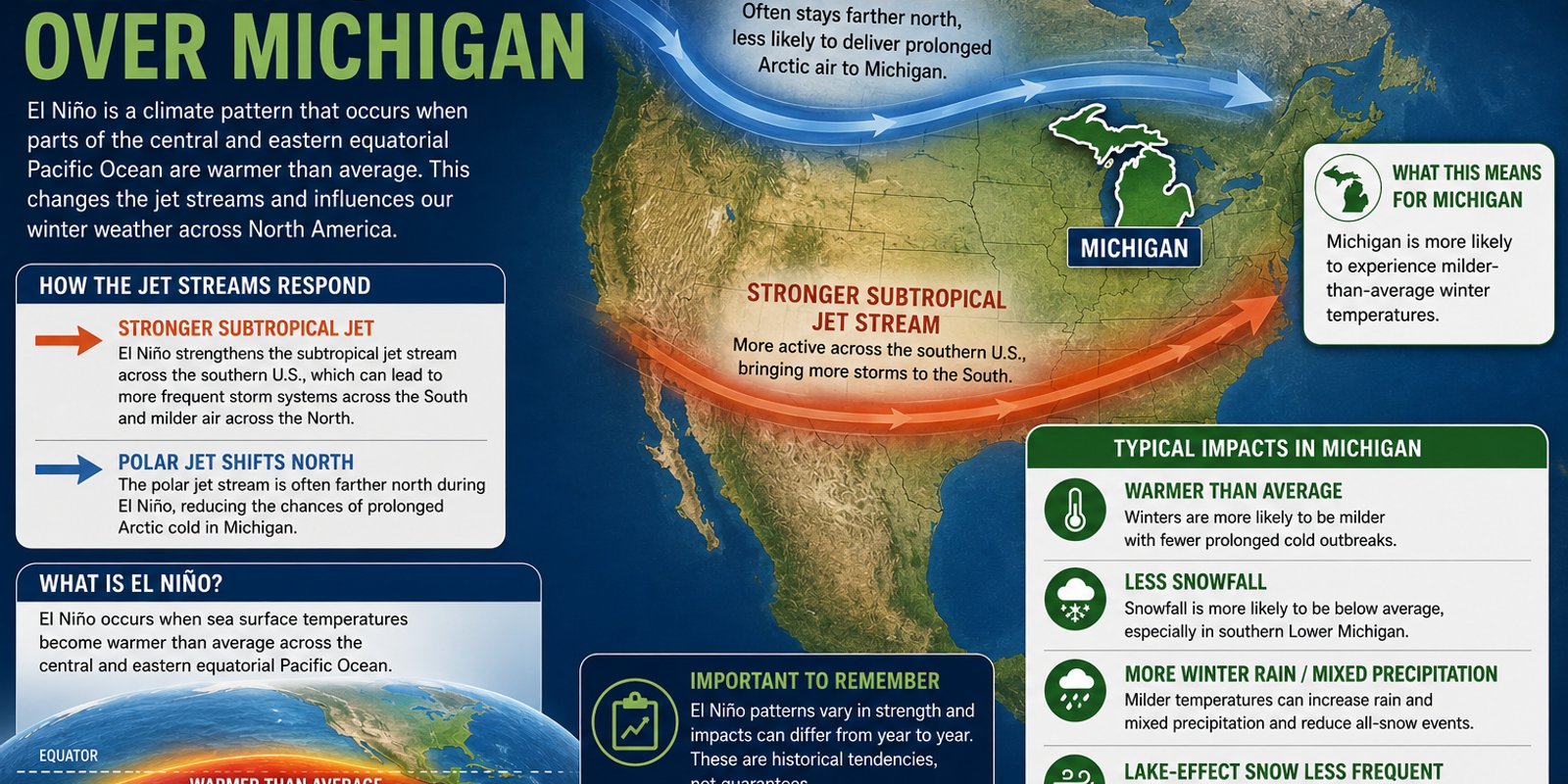
El Niño describes the warm phase of a fluctuating climate pattern along the equator in the Pacific Ocean — specifically, warmer-than-average sea surface temperatures along the equatorial Pacific. Both El Niño and La Niña typically occur every two to seven years.
The latest observations show El Niño conditions are strengthening, with the Niño 3.4 index climbing to +1.7°C as of late June 2026 — and most major modeling systems project continued intensification. NOAA forecasters put the chance of this becoming a "very strong" El Niño — with temperatures exceeding 2.0°C above average in the monitored Pacific region — at 63%.
That's significant. A temperature departure of 2 to 3 degrees Celsius above normal is not very common — it has only happened a handful of times since 1950.
But here's the important caveat: even a very strong El Niño does not guarantee a warmer or less snowy winter in Michigan. It simply increases the odds of that type of pattern developing. As one NWS director put it, every El Niño is unique with its own imprint on our weather.
What It Typically Means for Michigan Winters
During a typical El Niño winter, the jet stream over the north Pacific tends to shift southward, bringing the storm track over the southern tier of the U.S. — and El Niño often leads to a warmer than usual winter over the northern U.S.
For the Great Lakes region, this classic El Niño pattern typically brings warmer and drier conditions — pushing the polar jet stream further north and keeping the most brutal Arctic air bottled up in Canada. This often results in a milder winter with more days above freezing than usual, and because the storm track shifts to the southern U.S., the Great Lakes frequently miss out on the big storms and moisture-rich systems.
For the winter of 2026–27 specifically, NOAA's temperature outlooks favor above-normal temperatures across the northern tier of the country — a signal supported by calibrated dynamical models and statistical representations of typical El Niño impacts.
What this means for your heating system:
A milder winter doesn't mean a stress-free one. Cold snaps still happen during El Niño years — the pattern shifts the odds, it doesn't eliminate the cold. A heating system that's been neglected or is nearing the end of its useful life is most likely to fail on the coldest night of the year, not an average one.
If your furnace is 15 years old or older, or if it struggled to keep up last winter, an El Niño forecast is not a reason to skip maintenance or delay a replacement conversation. It's actually the opposite — a milder stretch is the best time to deal with aging equipment on your schedule rather than in a crisis.
Heat pumps become a more compelling conversation:
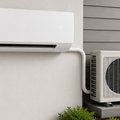
A winter that trends warmer on average is also one where a modern cold-climate heat pump can handle more of the heating load more efficiently. Systems from Mitsubishi and LG are engineered to operate well below freezing — and in a winter with fewer extreme cold snaps, they can manage the full season while running at significantly lower operating costs than fossil fuel alternatives. If you've been curious about mini-splits or a whole-home heat pump, an El Niño winter is a favorable context to have that conversation.
What It Typically Means for Michigan Summers
The El Niño influence doesn't start in December. The trend toward warmer and drier weather often starts as early as late autumn — and for the Great Lakes region, El Niño typically brings warmer and drier summer conditions as well.
For northeast Michigan, where summer humidity can already make a warm day feel significantly worse, a hotter and drier summer means your air conditioning runs harder and longer than it otherwise would. That puts additional strain on equipment that's already underperforming or undersized.
If your AC struggled last summer, this is the year to address it. Systems that short-cycle, run constantly without adequately cooling the home, or make unusual noises are already telling you something. Adding a hotter-than-normal summer on top of an underperforming system is how small problems become expensive emergencies.
If you've been putting off a new system, the window is narrowing. Installation schedules fill up quickly as temperatures rise. Getting a load calculation done and a system specified before peak cooling season — not during it — is how you avoid the delays and premium that come with urgent requests in July and August.
Why Sizing Still Matters More Than the Forecast
Whether the concern is winter heating or summer cooling, equipment sizing is the variable that determines whether your system actually handles what a season throws at it — El Niño or not.
At Grindstone, every installation starts with a Manual J load calculation — an engineering-based process that accounts for your home's square footage, insulation, ceiling height, window placement, and local climate. It produces a specific number: exactly how much heating and cooling your home actually needs.
Matching the size of what used to be there, or sizing based on a rule of thumb, may leave you short in years when the weather pushes outside normal ranges. That's worth keeping in mind when you're comparing estimates.
The Bottom Line
El Niño is here and expected to strengthen. For northern Michigan, that historically points toward a warmer, drier winter and a hotter summer — conditions that reduce your margin for error on aging or undersized HVAC equipment.
You don't need to make decisions based on a seasonal forecast. But if your system has been underperforming, is approaching the end of its lifespan, or you've been thinking about an upgrade, now is the right time to get ahead of it.
Grindstone serves Oscoda, Crawford, Ogemaw, Montmorency, Alcona, and Alpena counties. If you'd like a free estimate on a new system — or just want to talk through what your current equipment can handle heading into the next year — give us a call. We're happy to walk you through it.