
Mini-Split Heat Pumps in Michigan: Everything You Need to Know Before You Buy
Thinking about a mini-split for your Michigan home? You've got the right idea — but you also have questions. Does it really work when it's 5°F outside? Is it worth the cost? What's the catch? We're going to answer all of it, straight.
What Is a Mini-Split Heat Pump? (And Why Everyone's Talking About Them)
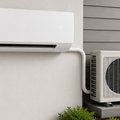
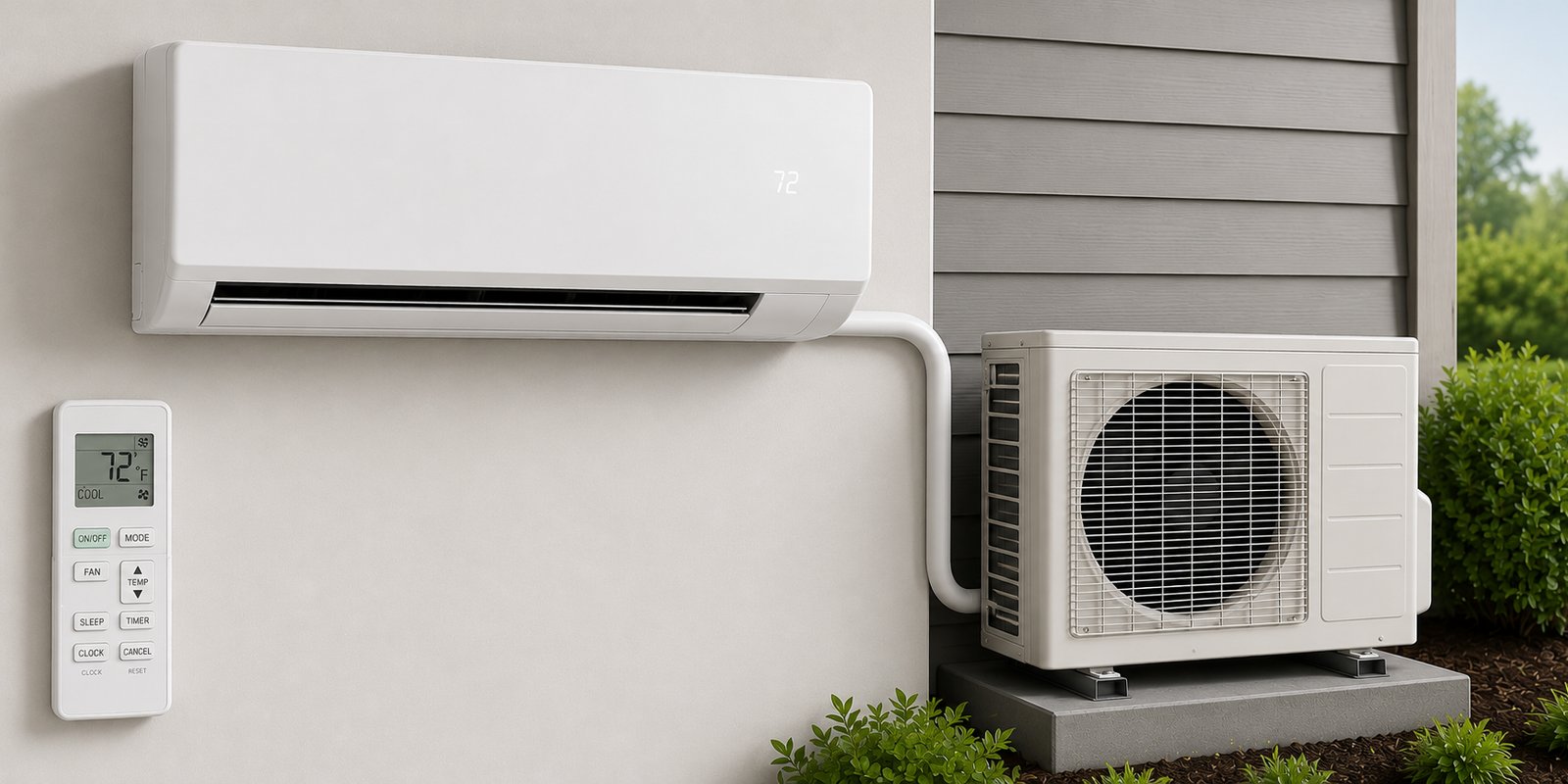
A ductless mini-split is a heating and cooling system with two components: an outdoor compressor and one or more indoor air handlers mounted on your wall or ceiling. No ductwork. No major renovation. One system handles both heating and cooling.
In summer, it pulls heat out of your home. In winter, it extracts heat energy from outdoor air — yes, even cold air — and moves it inside. That process is far more efficient than burning fuel to generate heat, which is exactly why utility bills go down for most homeowners who make the switch.
"But Does It Work in a Michigan Winter?"
This is the question we hear every single time. And it's the right question.
Older heat pumps had a real problem: performance dropped sharply below freezing, and most systems couldn't function at all below 20°F. For Michigan — where January nights in Oscoda, Montmorency, and Alcona counties regularly dip into single digits — that was a dealbreaker.
That era is over.
Today's cold-climate mini-splits are engineered for exactly this environment:
- Rated heating down to -13°F to -22°F depending on the model
- Full capacity at 5°F — the system isn't struggling, it's working as designed
- 2–3x more efficient than electric resistance heat, even at low temps
- Automatic defrost cycles that prevent ice buildup without interrupting heating
Mitsubishi Hyper Heat and LG make cold-climate units that are well-proven in Michigan conditions. When we install a mini-split, these are the only brands we trust.
The Michigan Homeowner's Case for a Mini-Split
Here's where the decision gets real. A mini-split isn't right for every situation — but for a lot of Michigan homes, it's the smartest investment you can make in your comfort and your utility bills.
You're heating with propane or heating oil.
This is where mini-splits deliver the biggest financial wins. Propane prices in mid-Michigan can swing dramatically from season to season, and you're never fully insulated from that volatility. A cold-climate mini-split can offset 60–80% of your heating load, dramatically reducing how much propane you burn — and how exposed you are to price spikes.
You have an addition, bonus room, or finished basement that's never comfortable.
Central systems weren't designed for the space you added or finished later. Rather than trying to reroute ductwork — expensive, disruptive, often ineffective — a mini-split gives that space its own independent zone. Heat it when you're using it. Don't when you're not.
You have an older home without ductwork.
Homes built with boilers and radiators, common across mid-Michigan, have no practical way to add central air conditioning. A mini-split solves that without tearing into walls and ceilings. You get cooling in the summer and significantly more efficient heating in the winter — in one system, with one installation.
You have a cabin or year-round up-north property.
East Twin Lake. West Twin Lake. Lewiston. Grayling. If you're using a cabin all four seasons, a cold-climate mini-split is one of the best investments you can make. Reliable. Efficient. One system for heating and cooling. No more space heaters cobbled together for a weekend trip in October.
You want to reduce your carbon footprint and energy costs together.
Heat pumps are the technology behind residential electrification for a reason. If you're thinking about solar panels, an EV, or simply lowering your environmental impact without sacrificing comfort, a mini-split is a natural first step.
What Does a Mini-Split Installation Actually Cost in Michigan?
We're not going to give you a number that doesn't apply to your situation — because it won't. A single-zone system for a room addition costs very differently than a whole-home multi-zone installation.
What we will tell you is what goes into the price:
- Equipment — brand, efficiency rating, number of zones
- Installation complexity — line set length, electrical upgrades, wall penetrations
- Any electrical panel work — mini-splits run on dedicated circuits; older panels sometimes need upgrading
Most single-zone installations start between $5,000–$6,000 installed. Multi-zone systems vary more widely.
Federal tax credits currently available: The Inflation Reduction Act provides a 30% tax credit (up to $2,000) for qualifying heat pump installations. That's real money back in your pocket — and it's worth factoring into the total cost comparison.
Want a real number for your home? That's what we're here for.
What Separates a Good Mini-Split Install from a Bad One
The equipment matters. The installation matters more.
Here's what to ask any contractor before you hire them:
Is the equipment rated for below-zero operation? Not just "below freezing" — below zero. If they can't tell you the minimum operating temperature of the unit they're proposing, keep looking.
Are they doing a Manual J load calculation? This is the industry-standard method for sizing equipment to your specific home. Skipping it means guessing. Guessing means an undersized system that can't keep up, or an oversized system that short-cycles and wears out early. At Grindstone, a Manual J Load Calculation is a non-negotiable for our team.
How is the line set protected? In Michigan winters, the refrigerant lines running along your exterior walls need proper insulation and protection from ice and snow load. This is often skipped on rushed installs. It shouldn't be.
What's the warranty, and who services it locally? Some equipment brands have limited local service networks. Make sure warranty service is available without a 3-week wait.
Our Recommendation for Most Michigan Homeowners
Don't replace your existing furnace with a mini-split — add one strategically.
For most Michigan homes, the smartest approach is a hybrid system: a cold-climate mini-split handles the majority of your heating load through fall, early winter, and spring (when it's most efficient), and your existing furnace covers the handful of truly brutal nights when temperatures drop below -10°F.
This approach delivers maximum efficiency savings while keeping your backup heat solid. It also means you're not betting your family's comfort on a single system.
Ready to Find Out If a Mini-Split Is Right for Your Home?
We offer free, no-pressure consultations for homeowners across northeast Michigan. We'll look at your home, your current system, and your goals — and give you an honest recommendation. Sometimes that's a mini-split. Sometimes it's something else. Either way, you'll leave the conversation with real information.
Call us today or fill out this form to schedule your free consultation.
We serve homeowners throughout northeast Michigan including Oscoda, Crawford, Ogemaw, Montmorency, Alcona, and Alpena counties.